Place guide
Maxwell National Wildlife Refuge
A high-plains refuge near Maxwell with lakes, wetlands, grasslands, and excellent birding along the eastern edge of the Rockies.
📍GPS: 36.572746, -104.583861
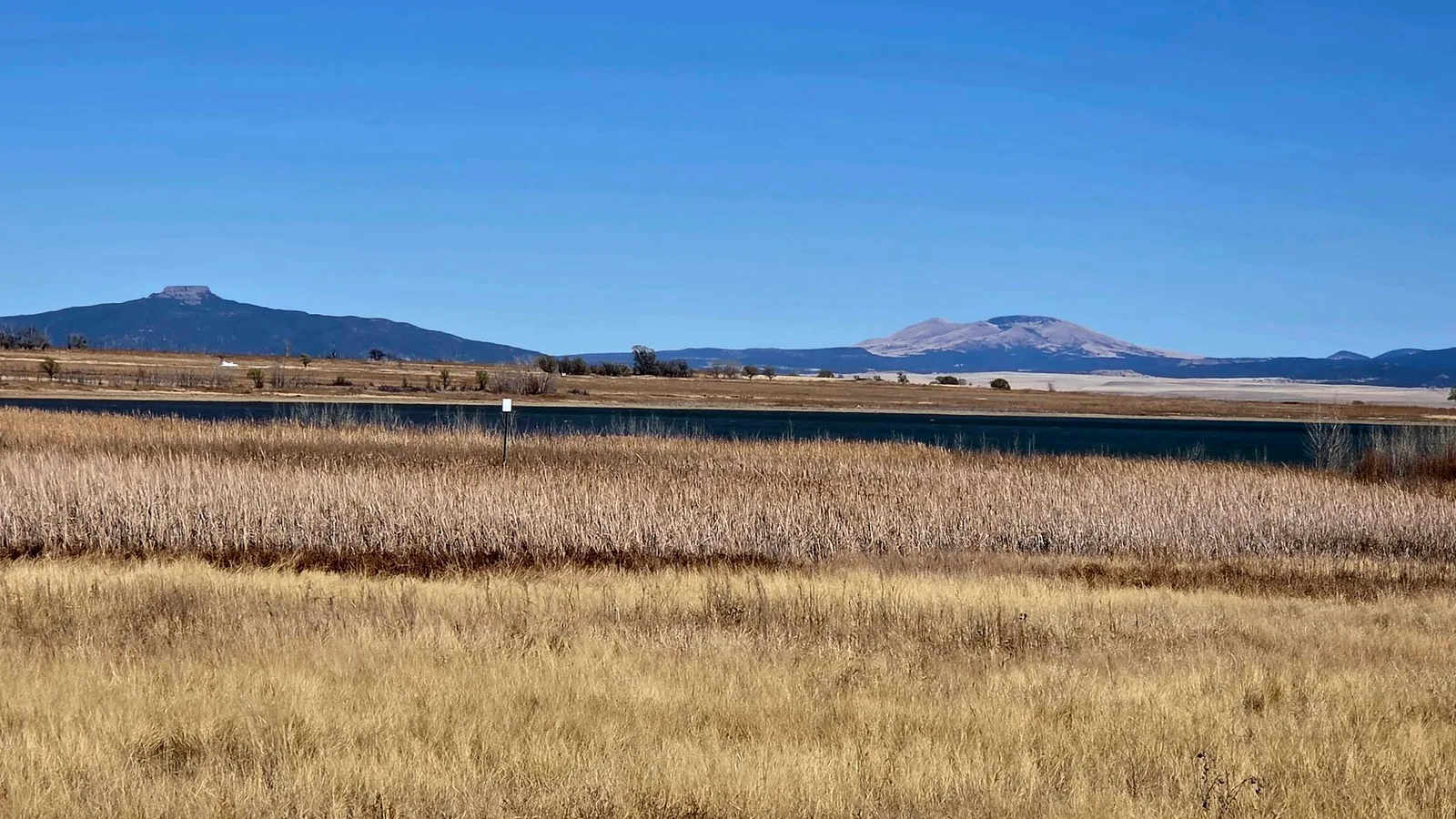
Maxwell National Wildlife Refuge protects 3,699 acres of lakes, wetlands, shortgrass prairie, and farmland in northeastern New Mexico, 25 miles south of Raton. Set in a broad basin between volcanic mesas and the Sangre de Cristo Mountains, the refuge provides an important stop for migrating birds along the Central Flyway. In fall and winter, thousands of ducks, geese, and sandhill cranes can gather around its shallow lakes and fields.
Playa Lakes Beneath the Mountains
Much of Maxwell National Wildlife Refuge surrounds a series of shallow lakes. Water levels change considerably with precipitation, so the landscape can shift from broad open water and muddy shorelines to nearly dry lakebeds. Exposed shorelines attract migrating shorebirds, while deeper water provides habitat for ducks and geese and the surrounding fields offer food for cranes. The setting is scenic with the Sangre de Cristo Mountains to the west and volcanic landscapes in the east.
Wildlife to Look For
- Birds: Sandhill cranes, Canada geese, ducks, Wilson’s phalaropes, American avocets, yellowlegs, long-billed dowitchers, wild turkeys, hawks, owls, and bald eagles.
- Mammals: Pronghorn, elk, mule deer, white-tailed deer, and black-tailed prairie dogs can all be seen around the refuge.
- When: Spring and fall are best for migrating shorebirds and waterfowl, while late fall and winter bring large numbers of cranes, ducks, and geese. Morning and evening generally offer the best wildlife activity.
Things to Do
- Drive the auto tour: Explore the refuge roads around the playa lakes and grasslands, stopping to scan the water and surrounding fields for wildlife.
- Watch Lake 13: The refuge’s largest public lake is one of the easiest places to look for waterfowl, shorebirds, cranes, and raptors.
- Walk the nature trails: The one-mile Cottonwood Nature Trail explores an old woodlot, while the 0.81-mile Lake 14 Levee Trail follows the edge of the wetlands.
- Visit the prairie dog town: A short 0.06-mile trail leads to an area inhabited by black-tailed prairie dogs.
- Fish Lake 13: Fishing is allowed from March 1 through October 31 for rainbow trout, channel catfish, yellow perch, and largemouth bass.
How Much Time to Spend
An hour is enough to drive through the refuge, stop at Lake 13, and watch for wildlife. Two hours gives you time to walk one of the short trails or spend longer watching birds around the playa lakes. During peak migration, birders and photographers might stay longer.
Getting There
Maxwell National Wildlife Refuge is just west of the small town of Maxwell and about 25 miles south of Raton. From I-25, take Exit 426, follow NM-445 north for about a mile, then NM-505 west for roughly 2.5 miles. Turn north onto Lake 13 Road at the refuge sign and continue about 1.25 miles into the refuge.
The refuge is free and its trails are generally open daily from sunrise to sunset. Restrooms are available near the headquarters and Lake 13 camping area, but the visitor center may not always be staffed.
Nearby places
Vermejo Reserve
A 550,000-acre Ted Turner guest ranch near Raton offering all-inclusive stays with safaris, fishing, and vast backcountry.
Philmont Scout Ranch
A museum in Cimarron dedicated to the history and values of the Boy Scouts of America.
Raton
A northeastern New Mexico city near the Colorado border, with a historic downtown and nearby mountain recreation.