Place guide
Rio Mora National Wildlife Refuge and Conservation Area
A quiet conservation area surroudning the Rio Mora with grasslands, wooded hills, and bison.
📍GPS: 35.839697, -105.068448
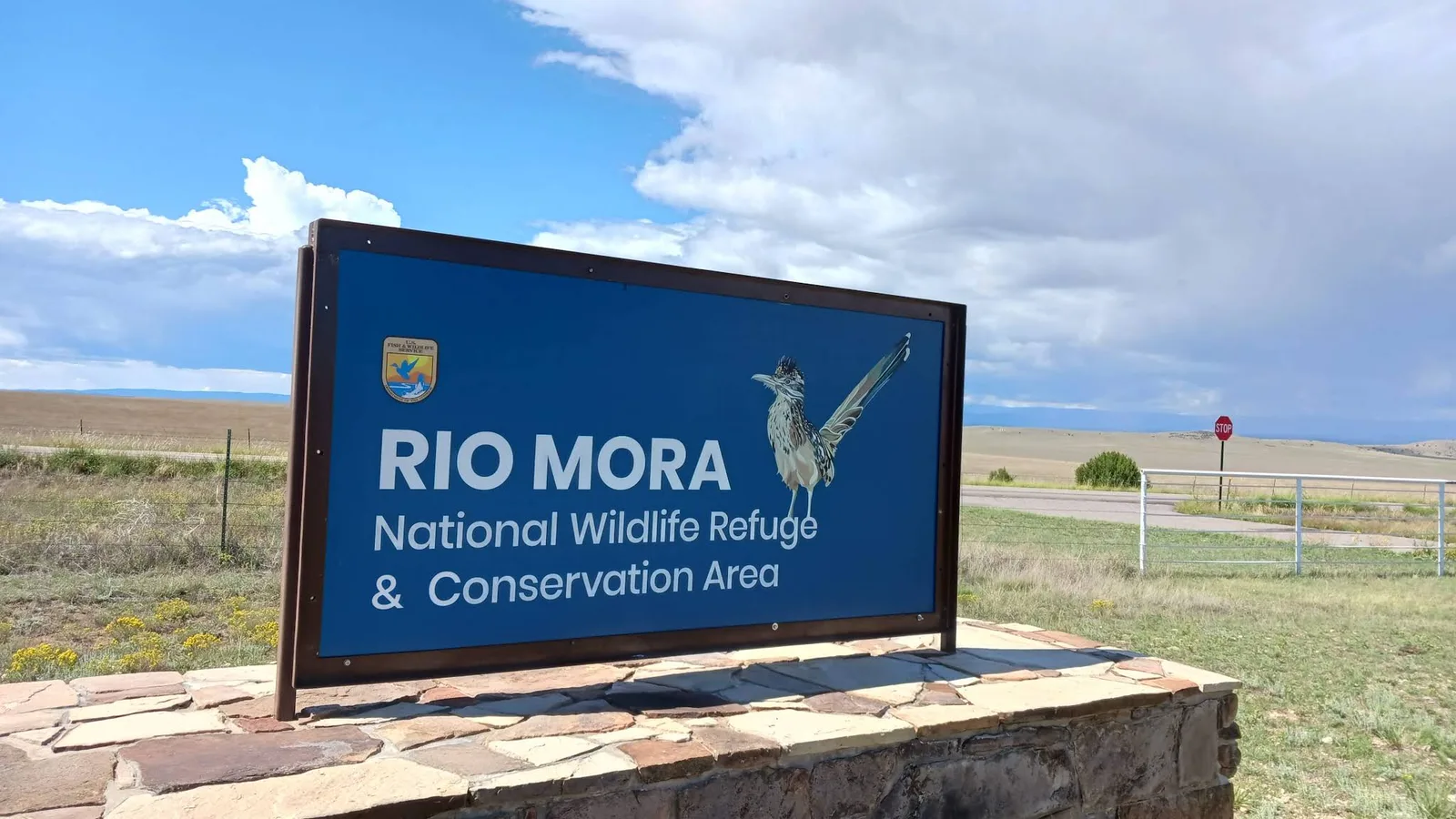
Rio Mora National Wildlife Refuge protects 4,224 acres of prairie, woodland, and river canyon near Watrous, about 25 miles northeast of Las Vegas. The refuge sits where the Great Plains rise into the foothills of the Southern Rocky Mountains, with five miles of the Mora River winding through its center.
Prairie Above, River Below
Most of Rio Mora sits on a rolling plateau covered in shortgrass prairie, piñon-juniper woodland, oak, and patches of ponderosa pine. Running through the middle is the Mora River, which has carved a canyon lined with cottonwoods, willows, springs, and wetlands.
This meeting of prairie, mountains, and river creates habitat for a wide variety of wildlife. Bison graze the open country, elk move through the grasslands and woods, and birds range from grassland species on the plateau to songbirds and waterbirds along the river.
The refuge is also the center of the much larger 952,000-acre Rio Mora Conservation Area, which covers most of the Mora River watershed.
Wildlife to Look For
- Birds: Long-billed curlews, grassland birds, songbirds, waterbirds, raptors, and roadrunners can all be found across the refuge’s varied habitats.
- Mammals: Bison and elk are the most impressive animals to watch for, along with mule deer and smaller prairie and woodland mammals.
- When: Spring and fall offer comfortable hiking and active birdlife. Morning and evening generally provide the best chance of seeing larger wildlife.
Things to Do
- Hike the Juniper Trail: Follow the 2.25-mile nature trail through prairie and piñon-juniper woodland to overlooks above the Mora River.
- Watch for bison: Bison roam freely on the refuge and may be visible near the trail or across the grasslands. Give them plenty of space.
- Look into the river canyon: Trail viewpoints reveal the green ribbon of the Mora River winding beneath cliffs and wooded slopes.
- Go birding: Watch for grassland birds on the plateau, songbirds in the woodlands, and waterbirds along the river.
- Photograph the landscape: The contrast between open prairie, rocky canyon walls, wooded river bottom, and distant mountains makes Rio Mora especially scenic.
How Much Time to Spend
An hour is enough for a short visit and part of the Juniper Trail, but plan on around two hours if you want to hike the full 2.25-mile route and spend time watching wildlife. There is relatively little developed visitor infrastructure, so the experience here is mostly about the trail, scenery, and wildlife.
Getting There
Rio Mora National Wildlife Refuge is near Watrous, about 25 miles northeast of Las Vegas. From I-25, take Exit 364 and follow NM-161 west for about 5.5 miles. Turn north onto County Road 016, also known as Loma Parda County Road, and continue about one mile to the Juniper Trail parking area. There is no entrance fee. The Juniper Trail is open year-round from 30 minutes before sunrise until 30 minutes after sunset, but much of the rest of the refuge is closed to general public access. The refuge headquarters is open by appointment rather than as a regular visitor center.
Nearby places
Fort Union National Monument
The largest 19th-century military fort in the Southwest, now preserved as adobe ruins on the Santa Fe Trail.
Storrie Lake State Park
A small reservoir park near Las Vegas, NM known for windsurfing, fishing, and wide-open prairie views.
Mora
A historic mountain community in the Mora Valley known for its adobe villages, acequia traditions, old mills, and scenic setting below the Sangre de Cristo Mountains.