Place guide
White Sands National Park
The world's largest gypsum dune field, creating an otherworldly landscape of white rolling dunes.
📍GPS: 32.786788, -106.325622
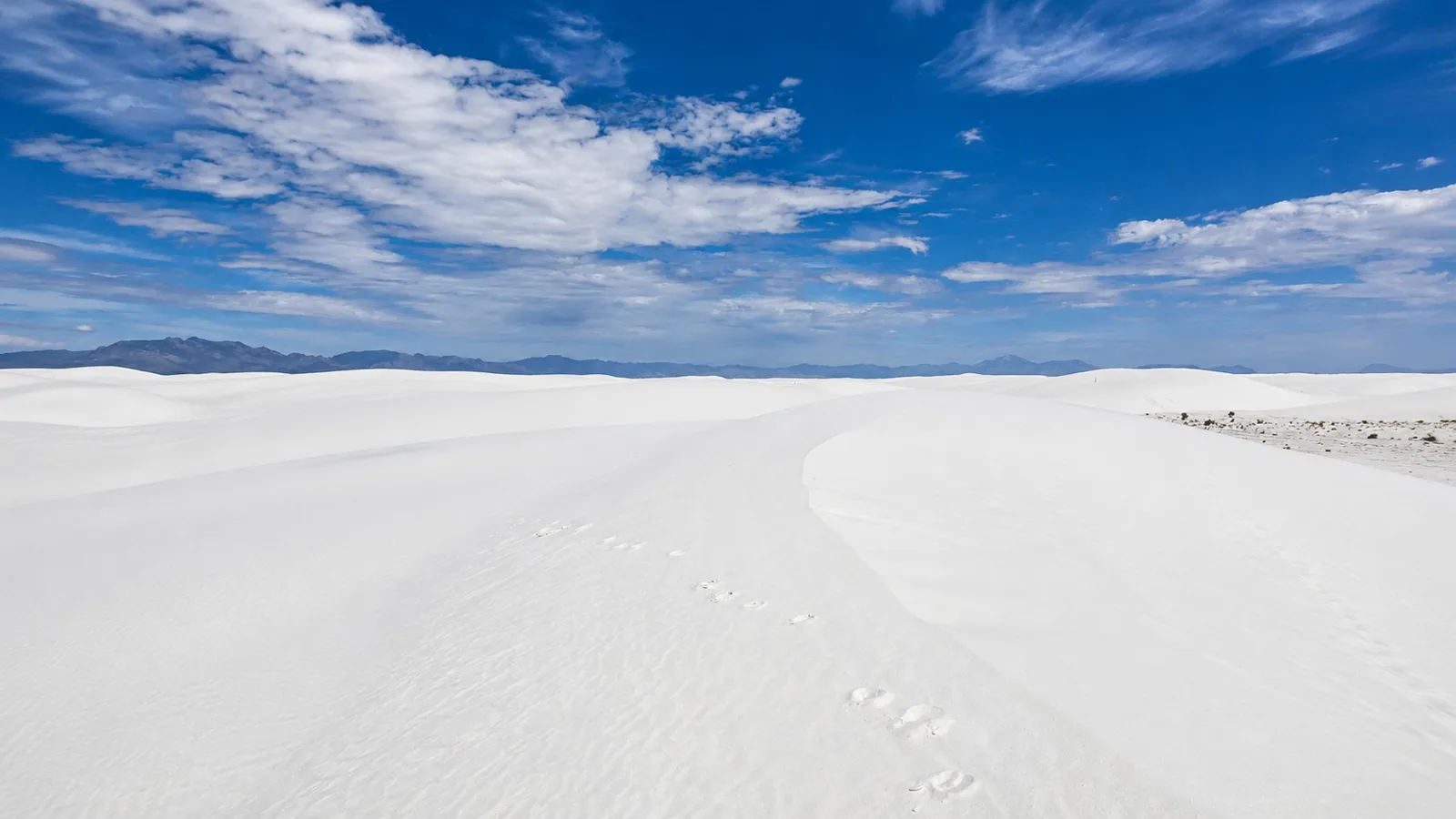
White Sands National Park is home to the world’s largest gypsum dune field, stretching across southern New Mexico in a landscape that is totally alien (in a good way)! Visitors can hike across the bright white dunes, sled down sandy slopes, and watch the desert change color at sunset. It is one of New Mexico’s most distinctive and unforgettable places and a good day trip from Las Cruces or Alamogordo.
Don’t Miss
A Walk Across The Dunes
White Sands is a car heavy park and walking even a short distance off the road can greatly enhance the experience. Cross just one dune, and the noise quickly fades, leaving the park feeling far more remote and wild. There are also plenty of green desert plants in White Sands (contrary to popular pictures) so if you want an all white dune shot, you will need to walk a bit.
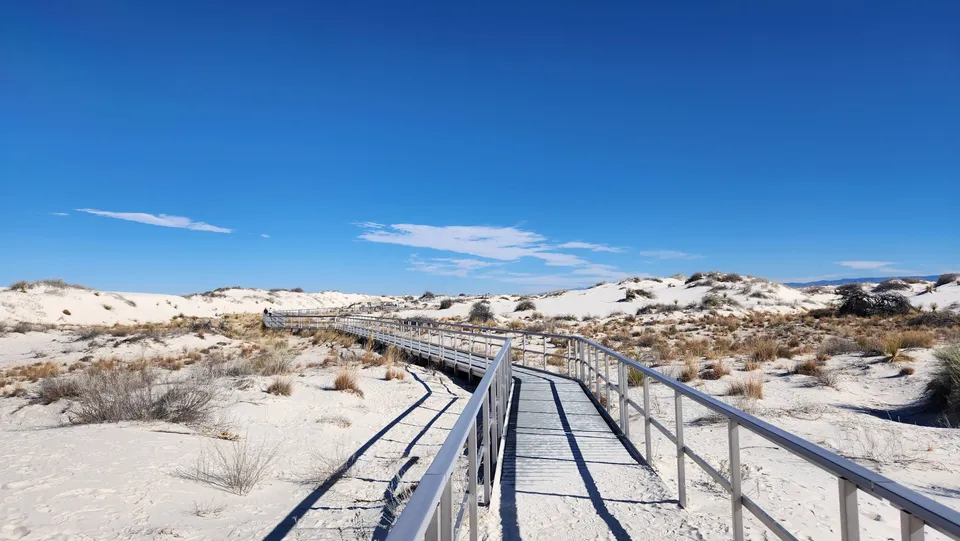
If you want a defined hike, there really isn’t much in the way of trails. The Interdune Boardwalk is notable because it has an easy path, interpretive signs and some shade at the end. The Dune Life Trail is a one mile loop that has some more signs about the native plants and animals of White Sands. Other than that, the shifting sands are the trail, and they are not very easy to walk in.
Sand Sledding
Dune sledding is a classic White Sands activity. It’s as simple as it sounds, you sit on a round plastic sled and slide down a dune. Sleds are available in touristy shops in Alamogordo or Las Cruces, and in the park at the visitor center. I’ve always had trouble getting a sled to slide well, I’ll report back if I find a good technique.
The Visitor Center
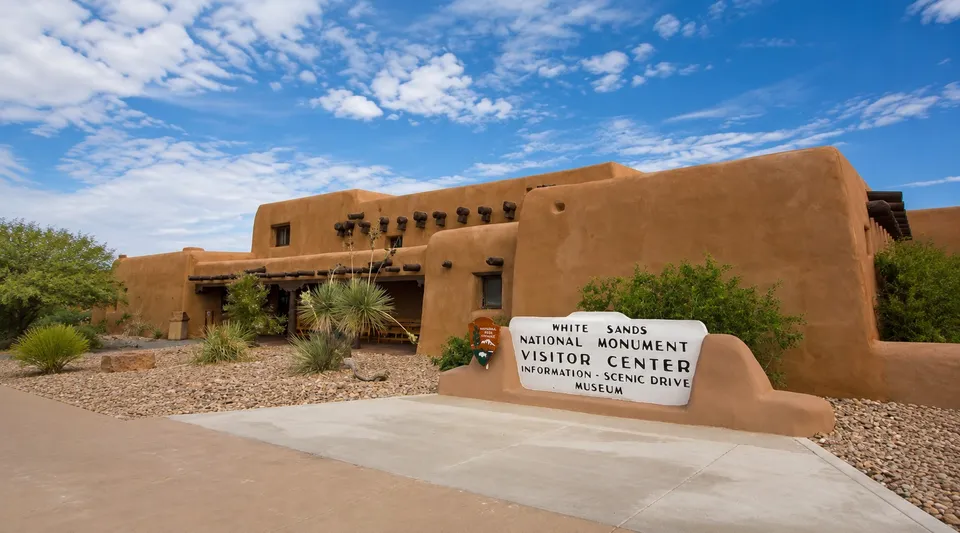
White Sands has an abundance of dunes but almost zero shade. The visitor center can provide a much needed respite from the sun and is a good place to start your visit. It has a cafe, a gift shop, and a small museum with exhibits about the park’s geology, wildlife, and history.
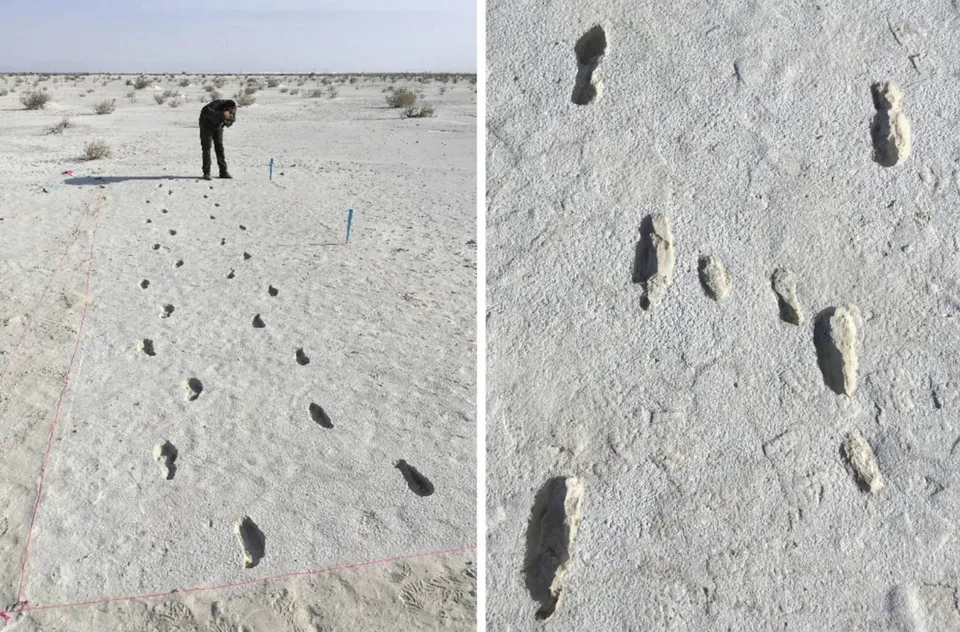
Long before White Sands’ dunes formed, Ice Age people walked along the muddy shores of ancient Lake Otero. Their fossilized footprints, dated to between 21,000 and 23,000 years ago, are among the oldest known evidence of humans in North America. You can learn more about the tracks at the visitor center!
Go Early Or Late
Although the park is beautiful and unique, within 20 minutes of stepping out of your car, you may feel ready to leave.
A little planning however, can make the difference between a quick photo stop and a memorable day. White Sands is at its best when the light is soft and the air is cool. It’s best to visit as early or as late as possible. The park can be unbearably hot in the middle of the day, and the lighting is prettier in the morning and evening.
White Sands also opens late for two days every month. Timing various but its based on when the moon is full. You can book a ‘moonlight hike’ tour that allows entry until 11pm and features a ranger guided walk through the dunes. You must book exactly one month in advance and the tickets sell out in 5 minutes or less so you need to wake up early.
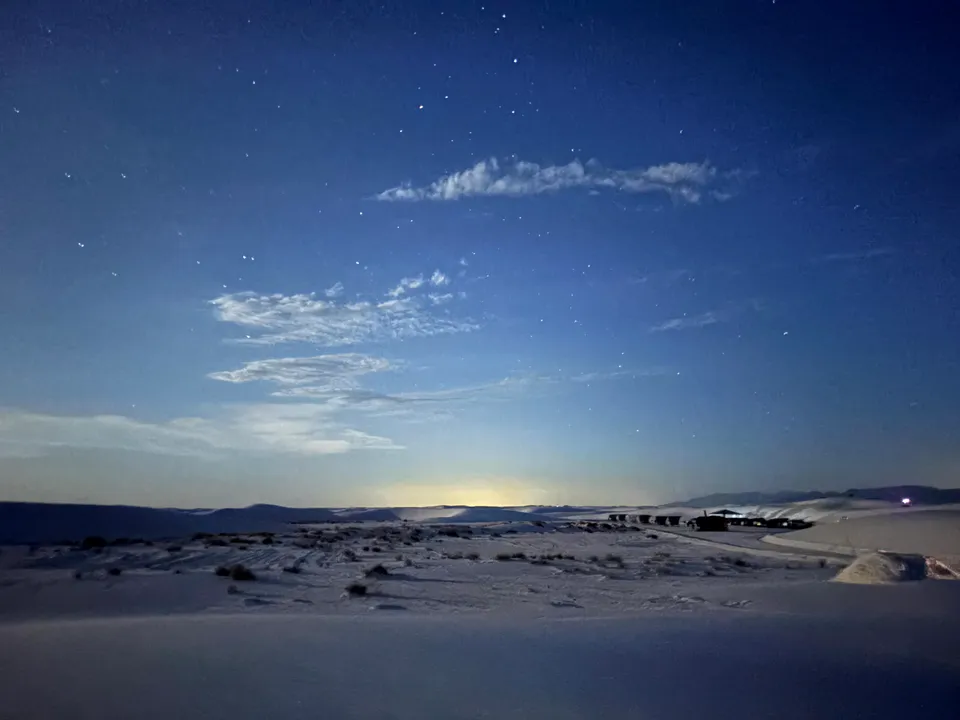
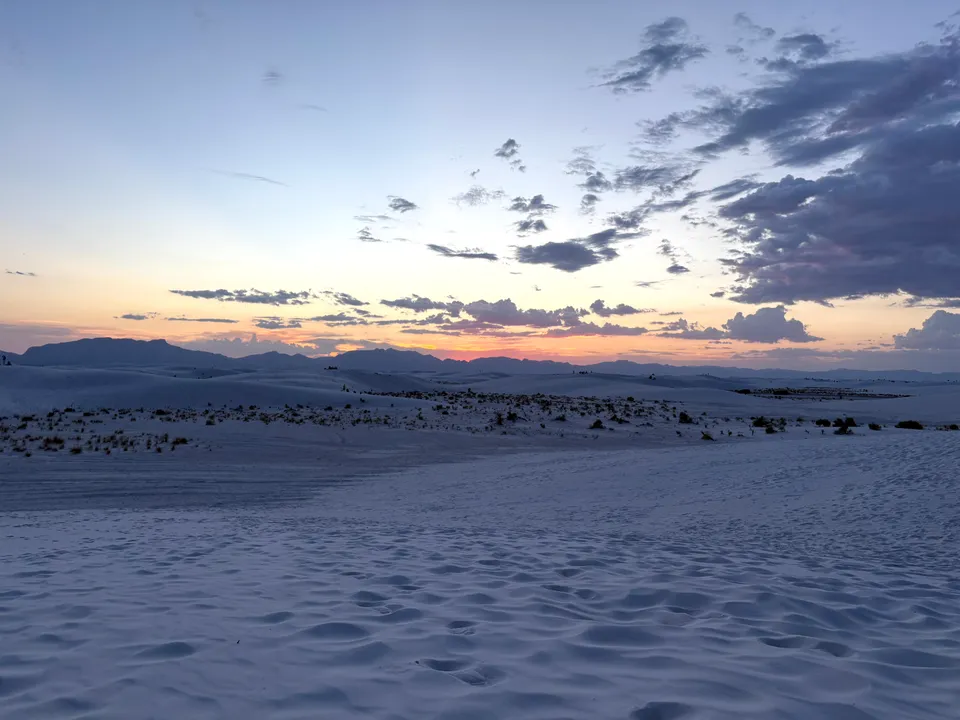
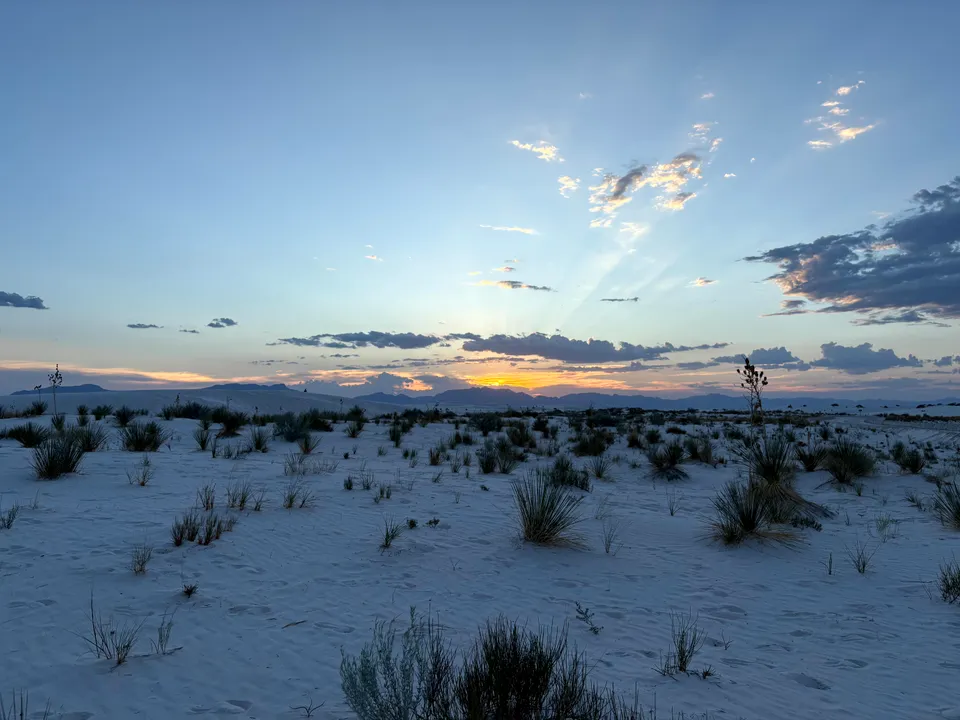
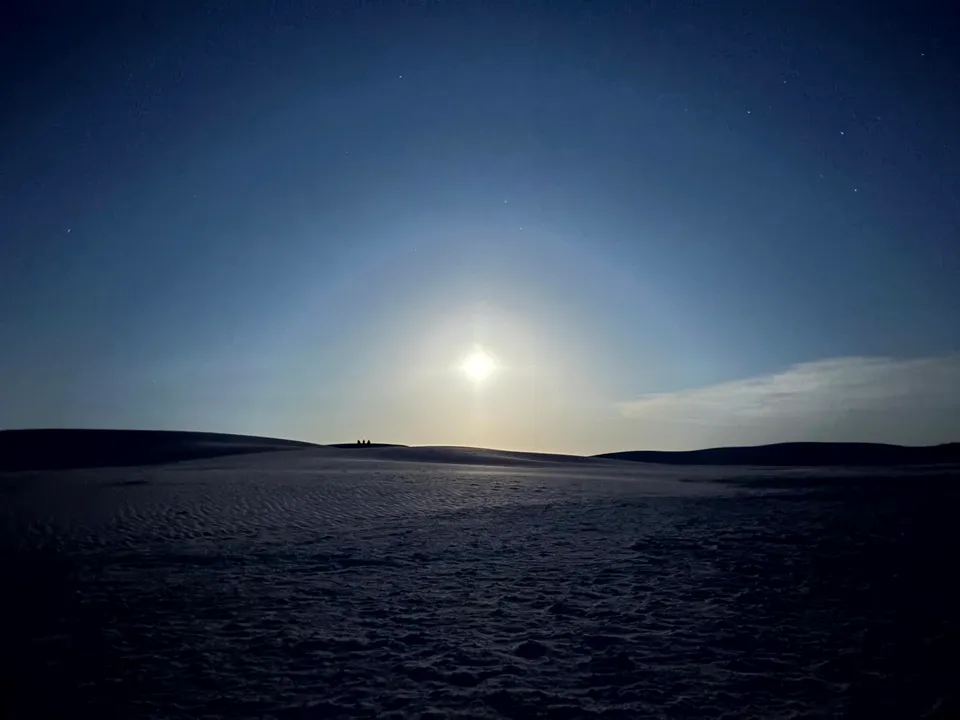
Alternatively, the park is open to public access until 11pm the day before the moonlight hike, no reservation required. As someone who has been to white Sands many times, I can confidently say this is the best way to experience the park. Sunsets look incredible and the stars and full moon light up the park in an incredible way that is hard to describe. The heat issues are also a non-factor at night, allowing you to enjoy the park without worrying about sunburn or heat exhaustion. Check the White Sands National Park website for the exact details if you plan to go at night.
How Long To Spend
Two to four hours is enough.
It would be totally reasonable to spend an hour at the visitor center and an hour walking the dunes. The park is beautiful and anyone who has been there will tell you that it is a unique and unforgettable experience. Just don’t plan a day around it!
Nearby places
San Andres National Wildlife Refuge
A restricted desert refuge within White Sands Missile Range where desert bighorn sheep have been reintroduced.
Atari ET Burial Site
The Alamogordo landfill where millions of unsold Atari E.T. game cartridges were buried in 1983.
Alamogordo
New Mexico’s 'Rocket City', set at the base of the Sacramento Mountains and serving as the gateway to White Sands National Park.