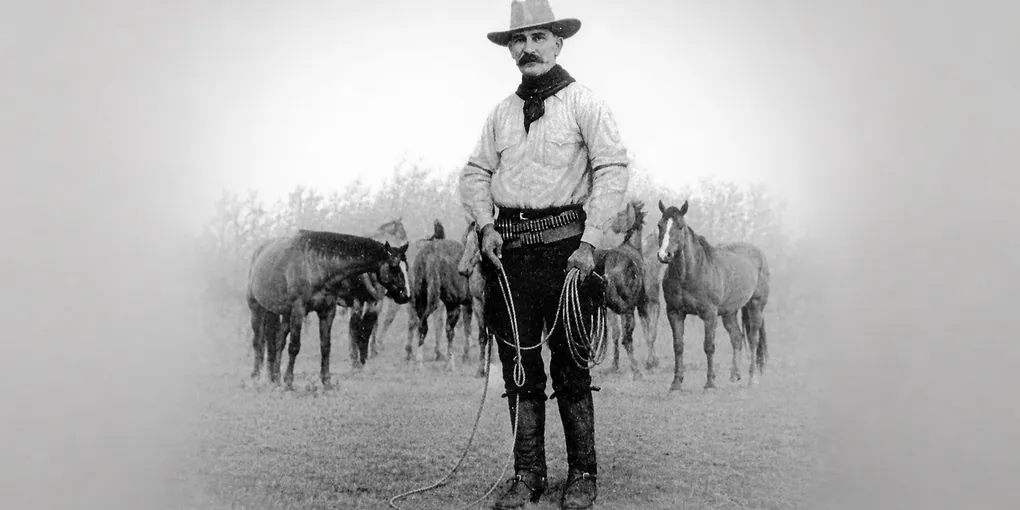
Who Was Oliver Milton Lee?
Oliver Milton Lee was one of the most colorful figures of territorial New Mexico: a rancher, gunfighter, businessman, politician, and at one point a suspect in one of the state’s most famous unsolved murder cases.
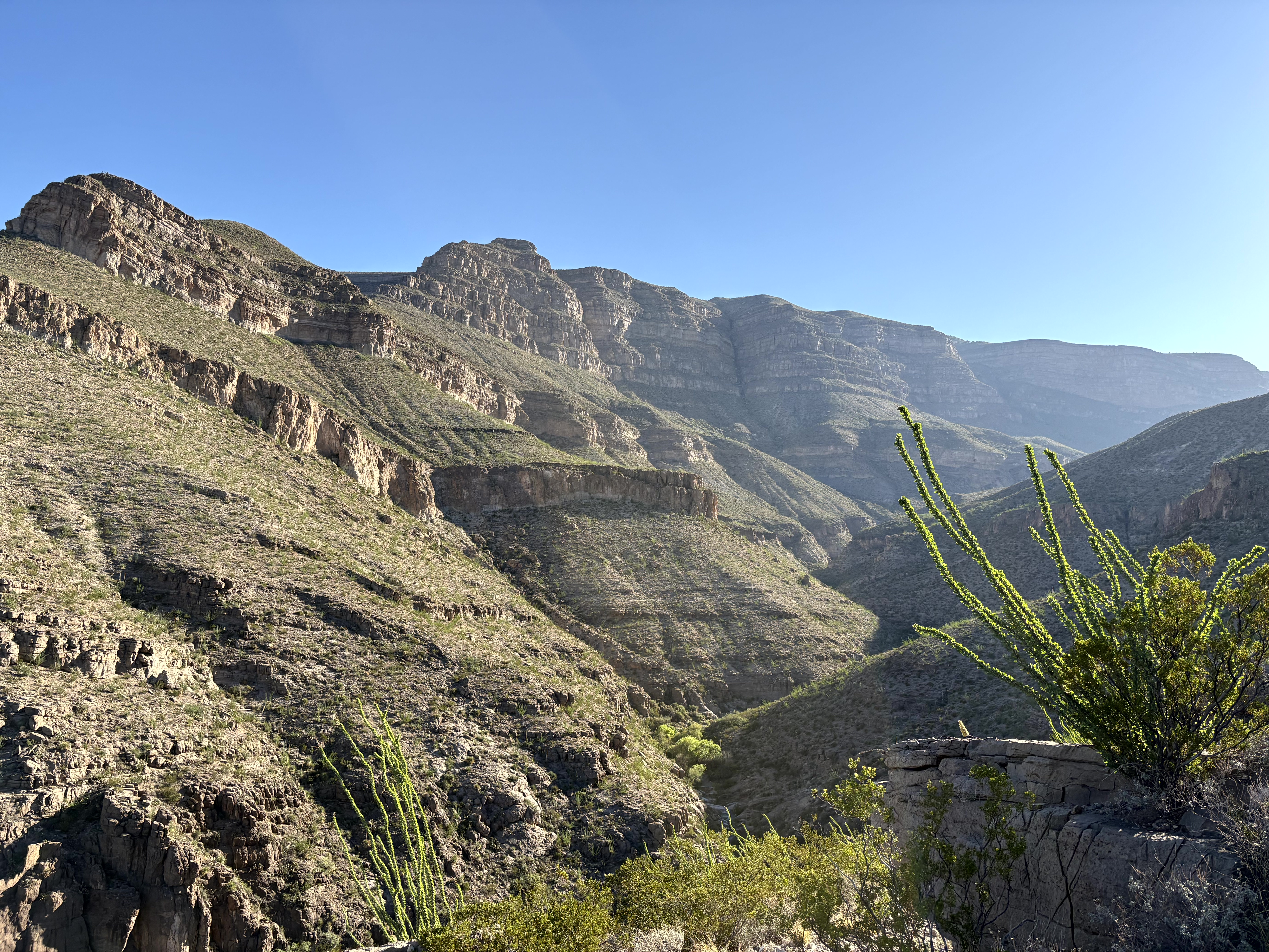
Today, his name is mostly associated with Oliver Lee Memorial State Park south of Alamogordo, where his restored ranch house still stands beneath the Sacramento Mountains.
But Lee’s life extended far beyond Dog Canyon.
From Texas to New Mexico
Oliver Milton Lee was born in Texas in 1865 and came to New Mexico as a young man in 1884.
Lee and his half-brother, Perry Altman, arrived in the Tularosa Basin looking for open land and opportunities in the livestock business. Lee quickly developed a reputation as a skilled horseman and an excellent gunman.
In 1893, he established a ranch at the mouth of Dog Canyon, where a dependable source of water made ranching possible in an otherwise extremely dry part of the Tularosa Basin.
Lee built a ranch house, corrals, reservoirs, and irrigation works, gradually expanding his livestock operations. His ranching interests eventually became enormous, with New Mexico State Parks estimating that his holdings reached roughly one million acres at their peak. That’s comparable in size to the current largest private holdings in New Mexico: the 1.1 million acres now managed by Ted Turner Reserves.
The Fountain Disappearance
The most controversial chapter of Lee’s life began in 1896.
Albert Jennings Fountain was a prominent attorney, politician, and prosecutor who had pursued cattle-rustling cases against a number of southern New Mexico ranchers. On February 1, 1896, Fountain and his eight-year-old son Henry disappeared while traveling through the desert east of Las Cruces.
Their abandoned wagon was later discovered along with blood and other signs of violence. Their bodies were never found. Suspicion soon fell on Lee and several of his associates, who had been among the ranchers targeted by Fountain’s investigations. Lee denied all involvement.
Oliver Lee vs. Pat Garrett
The investigation eventually brought Lee into conflict with one of the most famous lawmen in the American West: Pat Garrett, the former Lincoln County sheriff best known for killing Billy the Kid.
Garrett became sheriff of Doña Ana County and attempted to arrest Lee and his associate James Gililland. In 1898, Garrett and a posse tracked the men to Lee’s Wildy Well Ranch near the Jarilla Mountains. The attempted arrest erupted into a gunfight, and Deputy Kent Kearney was mortally wounded.
Garrett’s posse eventually withdrew while Lee and Gililland escaped. It was a news-worthy event, even by the standards of territorial New Mexico. The sheriff famous for hunting down Billy the Kid had been forced to retreat from a group of armed fugitives.
The Murder Trial
Lee eventually surrendered and was brought to trial in 1899 for the killing of Henry Fountain.
His defense was led by his friend and attorney Albert B. Fall, another influential figure in New Mexico politics who would later become a U.S. senator and Secretary of the Interior before being imprisoned for his role in the Teapot Dome scandal.
The evidence against Lee was largely circumstantial. After a highly publicized trial, Lee and Gililland were acquitted. No one was ever convicted for the disappearance of Albert and Henry Fountain, and exactly what happened to them remains one of New Mexico’s great mysteries.
Lee’s possible involvement has consequently been debated for more than a century.
Rancher and Politician
Whatever happened in the Fountain case, it did little to prevent Lee from becoming one of southern New Mexico’s most powerful citizens. He expanded his ranching and business interests and became involved in politics. Lee also supported development in the Tularosa Basin and was influential during the period when the railroad arrived and Alamogordo was being established.
Beginning in 1918, Lee served several terms in the New Mexico Legislature, including service as both a representative The transformation was quite ironic. A man who had once been pursued through the desert by Pat Garrett was now helping make laws for the State of New Mexico.
The Dog Canyon Ranch
Lee left his Dog Canyon ranch house in 1907 as his ranching operations expanded elsewhere.
The property passed through several owners and eventually came under federal control. By the twentieth century, the original ranch house had deteriorated substantially. Archaeological work conducted during the 1980s helped researchers reconstruct the property, and the ranch house was eventually restored to resemble its appearance during Lee’s time.
Today it is preserved as part of Oliver Lee Memorial State Park.
Oliver Lee’s Legacy
Oliver Lee died in Alamogordo in 1941 at the age of 76.
His legacy is difficult to fit into the traditional image of a frontier hero or an outlaw. He was a successful rancher who helped shape the development of the Tularosa Basin, a politician who served for years in the state legislature, and an important figure in the early history of Alamogordo. He was also a gunfighter who became the principal suspect in a notorious “double disappearance” and exchanged gunfire with a posse led by Pat Garrett.
Few people better represent the complicated, violent, and often surprisingly interconnected world of territorial New Mexico.