Place guide
Organ Desert Peaks National Monument
A monument protecting the jagged Organ Mountains and desert peaks rising around Las Cruces.
📍GPS: 32.240007, -106.611638
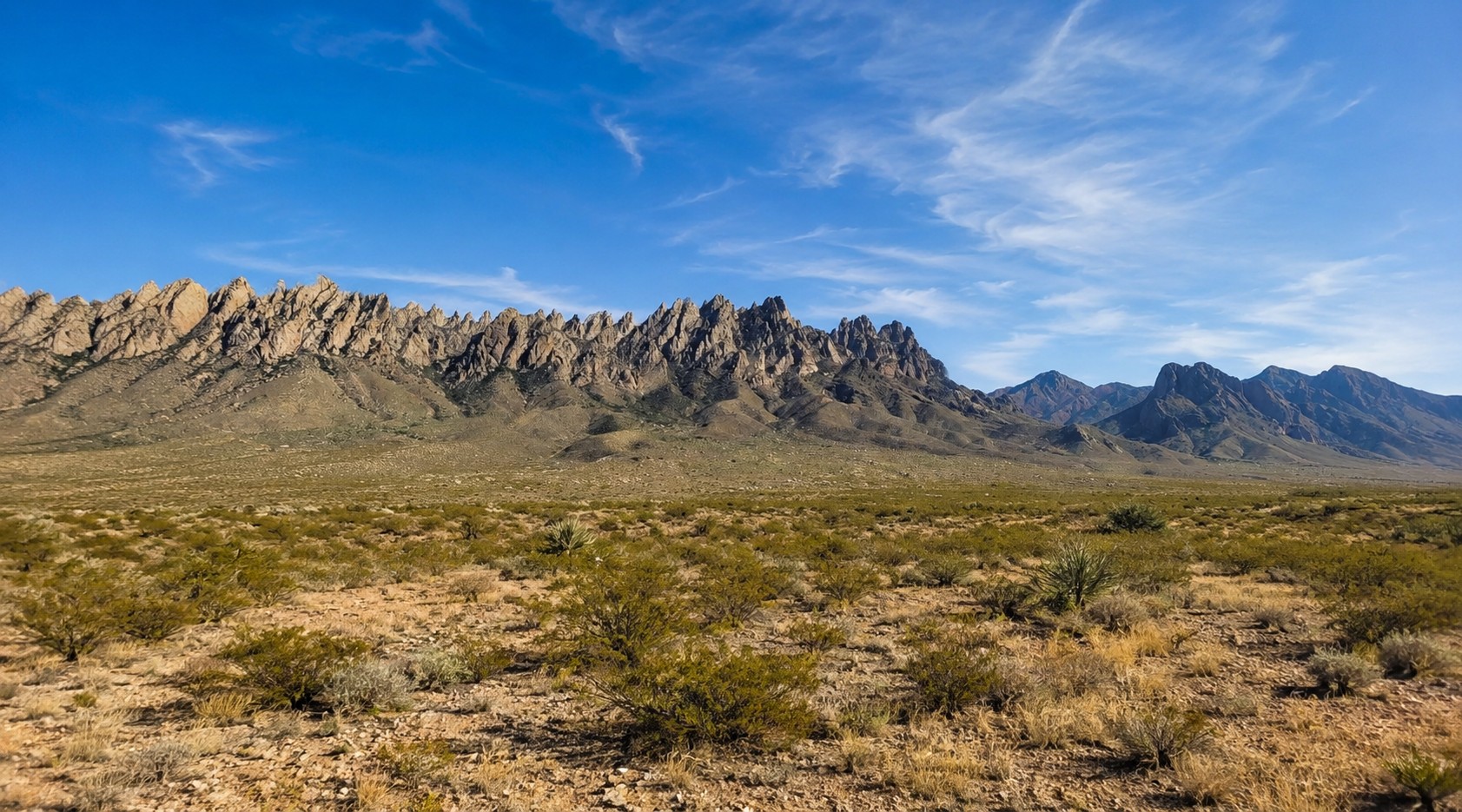
Organ Mountains–Desert Peaks National Monument
Organ Mountains–Desert Peaks National Monument protects nearly 500,000 acres of mountains, desert, volcanic terrain, historic sites, and wilderness surrounding Las Cruces. Established in 2014, the monument stretches across several disconnected sections rather than forming one continuous park. The BLM organizes it into four main areas: the Organ Mountains, Doña Ana Mountains, Desert Peaks, and Potrillo Mountains.
The Four Areas
Organ Mountains
The Organ Mountains rise sharply to the east of Las Cruces, forming the monument’s most recognizable landscape. Their jagged granite spires resemble the pipes of an organ and reach elevations of about 9,000 feet. This is the monument’s most developed and accessible section, with popular destinations including:
- Dripping Springs Natural Area
- Aguirre Spring Recreation Area (featuring the popular Pine Tree Trail)
- Soledad Canyon
The mountains contain desert vegetation at lower elevations, wooded canyons, seasonal springs, and small stands of ponderosa pine near the highest peaks.
Doña Ana Mountains
Located north of Las Cruces, the Doña Ana Mountains are lower and less dramatic than the Organs but contain an extensive network of trails. The area is especially popular for mountain biking, hiking, and rock climbing. Unlike the Organ Mountains, much of the terrain consists of open desert slopes, rocky ridges, and volcanic peaks. The Doña Ana Arch and Chihuahuan Desert Nature Park are also two points of interest that border the park.
Desert Peaks
The Desert Peaks area extends northwest of Las Cruces through the Robledo Mountains and Sierra de las Uvas. This section contains rugged mesas, volcanic cliffs, isolated canyons, archaeological sites, and broad views across the Chihuahuan Desert. Parts of the Robledo Mountains overlap with Prehistoric Trackways National Monument, where fossilized tracks preserve evidence of animals that lived nearly 280 million years ago.
Potrillo Mountains
The Potrillo Mountains form the monument’s largest and most remote section close to the US-Mexico border. Rather than jagged granite peaks, this area contains an enormous volcanic landscape of lava fields, cinder cones, craters, playas, and isolated mountains. Six designated wilderness areas protect much of the region.
An interesting feature is the Kilbourne Hole, a massive volcanic maar crater measuring roughly 1.7 miles long and more than a mile wide. Roads through the Potrillo Mountains are remote and often unpaved, so carry extra water and navigation tools.
Visiting the Monument
Organ Mountains–Desert Peaks is spread across a vast area, and there is no single entrance station or road connecting every section.
Dripping Springs and Aguirre Spring provide the easiest introduction for most visitors. The Desert Peaks and Potrillo Mountains are far more remote, with limited services, rough roads, and unreliable reception.
Carry plenty of water, download maps before leaving Las Cruces, and avoid entering remote areas during extreme heat or after heavy rain.
Nearby places
Tortugas Pueblo
A small unrecognized pueblo south of Las Cruces known for its annual Fiesta.
Taylor-Mesilla Historic Site
Historic home and storefronts showcasing the cultural heritage of the Mesilla Valley.
Las Cruces
Southern New Mexico's largest city, known for its Organ Mountain backdrop, rich history, and agriculture.